|
|  |
| |
 |
 |
 |
 |
 |
Faculty
 |
|
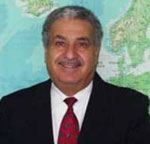
Assaf
Abdelghani,
ScD, MSPH
professor and chair, department of environmental
health sciences
|
|
|
Assaf
Abdelghani, ScD, MSPH, DPH
|
|
Suite
2109, Tidewater Building
|
|
1440
Canal Street, New Orleans, LA 70112
|
|
Phone:
(504) 988-2769 - Fax: (504) 988-1726
|
|
e-mail:
assafa@tcs.tulane.edu
|
Assaf
Abdelghani's current research and teaching focus
on the fate of chemical substances in the environment,
including point (industrial) and non-point (agricultural
pesticide) source pollution. His studies trace
the fate of these chemical substances in human
exposure, distribution and elimination by
food chain organisms, and persistence studies.
Abdelghani
has worked for many national and international
health organizations and ministries of health
around the globe, including work in Mexico, Honduras,
Taiwan, Kazakhstan, and Jordan, among others.
His responsibilities included assessing the impact
of biological and chemical contaminants on human
health and the environment, controlling communicable
diseases, health education, immunizations, food
and water protection, air quality, solid waste
disposal and controlling vectors of disease.
|
|
Abdelghani
also serves the director of the Environmental
Health Laboratories, which are an integrated part
of the Department of Environmental Health Sciences.
These laboratories are equipped for the teaching
and analysis of field and laboratory samples including:
aquatic organisms (fish, shrimp, crawfish, etc.),
water, vegetation, soil, sediment, air, animal
tissues, and urine and blood from both humans
and animals. These samples are analyzed for
inorganic and organic contaminants.
Abdelghani
is on the editorial board of International Journals
such as Environmental Toxicology, and Reviews
On Environmental Health. He has contributed
to numerous publications dealing with the fate
of chemical and biological contaminants in the
environment.
Education
DPH environmental health sciences, Environmental
Training Center, Amman, Jordan, 1959
DPH environmental health sciences, American
University of Beirut, Lebanon, 1960
BS environmental health sciences, American
University of Beirut, Lebanon, 1967
MSPH environmental health sciences, Tulane
University School of Public Health and Tropical
Medicine, 1972
ScD environmental health sciences, Tulane
University School of Public Health and Tropical
Medicine, 1978
|
|
 |
|
Anderson,
Ann C., PhD
senior associate dean and professor, department
of environmental health sciences
|
|
|
Ann
C. Anderson, PhD
|
|
Suite
2210, Tidewater Building
|
|
1440
Canal Street, New Orleans, LA 70112
|
|
Phone:
(504) 988-5397 Fax: (504) 988-5718
|
|
e-mail:
acanders@tcs.tulane.edu
|
|
Ann
Anderson has been a member of the faculty at Tulane
University School of Public Health and Tropical
Medicine since 1969. In 1991, she became associate
dean for academic affairs, and served as acting
dean from January through December of 1996. In
addition to her current role as senior associate
dean, she served as the acting director of Tulane
Medical Center for Women's Health from 1995 through
1998. She recently co-chaired the school's Self
Study Steering Committee and directed the writing
of the Self Study Report for Accreditation by
the Council on Education for Public Health (CEPH).
This resulted in a seven-year accreditation, the
maximum awarded, by the council. She also chaired
the 1995 Strategic Planning Committee for the
School.
|
|
Anderson
serves as a liaison for the Louisiana Office of
Public Health to facilitate public health practice
initiatives. She recently developed the South
Central Public Health Leadership Institute in
cooperation with the office and the departments
of health in Alabama, Arkansas and Mississippi.
In
addition to curriculum development, Anderson teaches
a course in environmental health. Her research
interests focus on the fate and persistence of
toxicants in the environment including biodegradation
and bioaccumulation, and toxicity testing using
microorganisms and aquatic biota.
Anderson
has over 150 professional publications and presentations
in environmental microbiology and environmental
health. She developed a computer based training
program in toxicology and risk assessment, which
was sponsored by the Environmental Protection
Agency (EPA).
Anderson chairs the steering committee of the
Association of Schools of Public Health Cooperative
Agreement with the Health Resources and Services
Administration.She is a counselor for the National
Environmental Health Science and Protection Accreditation
Council, a member of the New Orleans Mosquito
Control Advisory Board, and a formal member of
the Public Health Subcommittee of the EPA Gulf
of Mexico Program. She is the United States' associate
editor for the international journal, Environmental
Toxicology and Water Quality.
Education
BS (Magna Cum Laude), Loyola University
MS Louisiana State University Medical Center
PhD Louisiana State University Medical
Center
|
|
 |
|
Neil
W. Boris, MD
associate professor,
maternal and child health
|
|
|
Neil
W. Boris, MD
|
|
Suite
2308, Tidewater Building
|
|
1440
Canal Street, New Orleans, LA 70112
|
|
Phone:
(504) 988-3539 Fax: (504) 988-3540
|
|
e-mail:
nboris@tulane.edu
|
I received my medical degree from Tufts University
in Boston, Massachusetts in 1988 and completed
a combined residency in pediatrics, adult psychiatry
and child psychiatry at Brown University in Providence,
Rhode Island in 1993. During my last year of training,
I wrote my first grant for a four-year physician/scientist
research career development award that was sponsored
jointly by the National Institute of Mental Health
and the American Academy of Child and Adolescent
Psychiatry. The funding I received allowed me
to study the social and emotional development
of high-risk children under five years of age.
Specifically, I worked with families who had children
in foster care or were living in a shelter to
identify and study young children with attachment
disorders. Since entering the wide world of public
health, I've had a chance to combine my interests
in child development and psychology with illness
prevention.
|
|
In August of 1998, I came to Tulane with the promise
of teaching a diverse group of students, while
continuing to build my research focus and do clinical
work with medically-ill kids. I teach child development
and public health, isues in adolescent health
and preventive intervention in childhood and adolescence,
and am a guest lecture in a number of other classes.
My research includes evaluating an intensive home
visiting project serving low-income mothers and
conducting a unique follow-up study of abused
and neglected children who were first seen before
the age of four. I am also lucky enough to be
the co-director of the child psychiatry consultation
service covering the pediatric wards and intensive
care units at Tulane Medical Center and University
Hospital.
When I get the chance, I love to tour the world
by bicycle, read novels, write a little poetry,
and enjoy family and friends. You'll also regularly
find me catching some blues at local clubs - New
Orleans is a field of dreams when it comes to
music!
|
|
 |
|
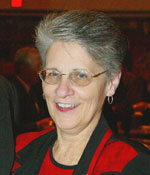
E.
Elaine Boston, RD, MPH, DrPH
clinical
assistant professor, department of community
health sciences and associate dean, admissions
and student affairs
|
|
|
E.
Elaine Boston, DrPH, MPH, RD
|
|
Suite
2460, Tidewater Building
|
|
1440
Canal Street, New Orleans, LA 70112
|
|
Phone:
(504) 988-3539 Fax: (504) 988-3540
|
|
e-mail:
eboston@tulane.edu
|
Elaine
Boston is the associate dean for admissions
and student affairs and a clinical assistant
professor in community health sciences.
Also noteworthy has been her establishment
of the Peace Corps Master's Internationalist
Program at Tulane, the largest such program
in the country. In three year's time, graduate
students both earn a master's degree and
complete two years' service in the US Peace
Corps.
Boston is an active member of the American
Dietetic Association, American Association
of Public Health, Delta Omega Society and
the National Association of Graduate Admissions
Professionals. Her academic interests include
maternal and child nutrition, primary, secondary
and tertiary prevention of nutritional diseases
in different population groups, and nutritional
risk factors associated with the development
of cancer.
Boston's love for and commitment to better
health for all people is evident in almost
thirty years of teaching and mentoring public
health scholars from around the world.
Education
BS vocational home economics, Northwestern
State University of Louisiana, 1962
MPH nutrition, Tulane University
School of Public Health and Tropical Medicine,
1979
DrPH international health and development,
Tulane University School of Public Health
and Tropical Medicine, 1990
|
|
|
 |
|
Stuart
Capper, DrPH
professor,
department of health systems management
|
|
|
Stuart
A. Capper, DrPH
|
|
Suite
1923, Tidewater Building
|
|
1440
Canal Street, New Orleans, LA 70112
|
|
Phone:
(504) 988-6758 Fax: (504) 988-3783
|
|
e-mail:
capper@tulane.edu
|
Stuart
Capper is a professor in health systems management.
He is also assistant director of the Food Safety
Initiative at the National Center for Infectious
Diseases at the Centers for Disease Control and
Prevention. He is a member of the faculty of the
CDC preventive medicine residency program.
Capper was previously associate dean of the School
of Public Health and chairman of the health care
organization and policy department at the University
of Alabama at Birmingham (UAB). Prior to his appointment
at UAB in 1977, he served as senior staff to the
chancellor of the Tulane Medical Center in New
Orleans. He also has held administrative positions
in hospitals, facilities for the mentally retarded,
and a health systems agency. Through the Sparkman
Center for International Public Health Education,
Capper has taught graduate public health management
courses at the Universidad Peruana Cayetano Heredia
in Lima, Peru and the Chiang Mai University Medical
Center in Chiang Mai, Thailand.
Capper
has been the principal investigator or co-principle
investigator on projects concerning the implementation
of strategic management processes in several state
health departments. He has received funding from
the Bureau of Health Professions to conduct management
case research for public health practice in collaboration
with public health practitioners, and he has been
funded by the Bureau of Maternal and Child Health
for the development and presentation of masters
level management courses for MCH students. He
has been funded by HRSA for the development and
presentation of internet-based continuing education
programs for public health practitioners, and
he is currently funded by the CDC to conduct case
research on food safety and to work on bioterrorism
preparedness efforts. His publications in the
area of public health management have appeared
in journals such as Public Health Reports,
Public Productivity and Management Review, Health
Services Management Review, Preventive Medicine,
Academic Medicine, The European Journal of Public
Health and the Case Research Journal. He
is senior author of the book Public Health
Leadership and Management: Cases and Context
(Sage Publishers).
Education
BS psychology, Tulane University, 1969
MPH health services and hospital administration,
Tulane University 1971
DrPH health systems management, Tulane
University School of Public Health and Tropical
Medicine, 1971
certificate in mediation, Jones School
of Law, Montgomery, Alabama, 1997
|
|
 |
|
Tom
Farley, MD MPH
chair, department of community health sciences
|
|
|
Tom
Farley, MD, MPH
|
|
Suite
2306, Tidewater Building
|
|
1440
Canal Street, New Orleans, LA 70112
|
|
Phone:
(504) 988-5391 - Fax: (504) 988-3540
|
|
e-mail:
tfarley@tulane.edu
|
My
background is in pediatrics, epidemiology,
and control of infectious diseases. I have
worked on a child health program in Haiti,
in infectious disease epidemiology for the
Centers for Disease Control and Prevention,
and in prevention of vaccine-preventable
diseases, tuberculosis, STDs, and HIV at
the Louisiana Office of Public Health. In
recent years I have evaluated interventions
to control bacterial STDs and HIV.
|
|
|
My
work in prevention of STDs/HIV led me toward population-based
interventions to address the underlying causes
of high-risk sexual behavior. Because these underlying
causes influence other diseases and injuries as
well, I moved from infectious disease control
at the health department to the department of
community health sciences at Tulane. I am interested
in developing, implementing, and evaluating population-based
interventions for a range of health problems,
particularly interventions that act on our social
and physical environment. As chair of the community
health sciences department, I also plan to build
on the department's strengths in teaching, research,
and community service. I would like our department
to be known for training effective public health
leaders, conducting research that is innovative
and important to public health, and improving
the health of our local communities.
Education
BA, mathematics, Haverford College 1977
MD, Tulane University 1981
Epidemic Intelligence Service, Centers
for Disease Control and Prevention, 1989
MPH, Tulane University 1991
Research
Interests
prevention of STDs/HIV
social and physical environmental determinants
of health
|
|
 |
|
Mark
A. James, Ph.D.
professor and vice chair academic, tropical
medicine
|
|
Mark
A. James, PhD
Suite
2214 , Tidewater Building
1440 Canal Street, New Orleans, LA 70112
Phone: (504) 988-2503 Fax: (504) 988-7313
e-mail: mjames@tulane.edu
Academic/Research
Interests: Mark James' laboratory carries out
research on parasite immunity, most of which is
dedicated to the study of immunity to the malarial
parasite. His focus has been on the use of non-human
primate vaccine models for tropical parasitic
diseases, development of synthetic peptide-based
immunoassays, and the study of cytokine responses
to acute plasmodium infections. Other recent studies
have targeted the prevention and control of tuberculosis
in the homeless population of New Orleans. James
and his colleagues hope to show that a comprehensive
approach to tuberculosis control in homeless shelters
may be as effective as strategies based on isolation
and directly observed therapy of affected patients.
Finally, James is planning investigations designed
to identify biomarkers of fungal exposure and
disease in asthmatics.
James received the Excellence in Teaching Award
(awarded by students) in 1990, 1996, 1997, and
1998; and the Teaching Scholar Award (awarded
by peers) in 1999.
Education
BS zoology, University of Wisconsin, 1972
MS zoology, University of Illinois, 1975
PhD,
University of Illinois, Urbana-Champaign Departmental
1979
|
|
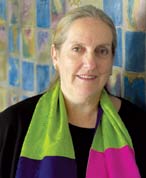
Penny
Jessop, MPH
clinical instructor, department of international
health and development |
Penny
Jessop, MPH
Suite
2200-10, Tidewater Building
1440 Canal Street, New Orleans, LA 70112
Phone: (504) 988-3655 Fax: (504) 988-3653
e-mail: pjessop@tulane.edu
Penny
Jessop joined joined the Peace Corps after college,
spending three and a half years in Niger, West
Africa, as a health volunteer. She later spent
two and half years in Puerto Rico doing hospital
administration and learning Spanish. After six
years in the tropics, when she was looking for
a master's program, Penny sought out a warm climate
and settled on New Orleans where she earned a
master of public health in administration with
honors at Tulane University.
After
two years of work doing grants and contracts administration
for Tulane, she jointed the School of Public Health
and Tropical Medicine. She has coordinated the
school's Humphrey Program since 1979. Penny is
also responsible for coordinating the master's
and doctoral level training of more than 300 students
from fifty different countries each year. Over
the years, Penny has also conducted short-term
public health training programs for participants
from Colombia, Guatemala and Ecuador. Penny will
be co-teaching SPHL 601: Epidemics, Revolutions,
and Response: The Historical Development of Public
Health for the undergraduate public health program.
Penny speaks English, French, Spanish, and Djerma/Songhai.
Education
BA, sociology, Drew University
MPH,
Tulane University
|
|
 |
|
Carl
Kendall, PhD
acting chair,
department of international health and development
|
|
Carl
Kendall, PhD
Suite
2216, Tidewater Building
1440 Canal Street, New Orleans, LA 70112
Phone:(504) 988-2334 Fax:(504) 988-3653
e-mail: ckendall@tulane.edu
|
|
Carl
Kendall is a medical anthropologist with more
than thirty years of experience in international
health. Kendall first joined the department in
1993, after moving from Johns Hopkins University
department of international health where he was
director of the Center for International Community-Based
Health Research. From 1998 to 2000 he served as
head of the maternal and child epidemiology unit,
department of epidemiology and population health,
at the London School of Hygiene and Tropical Medicine.
His prior positions include serving as chief of
the behavioral research unit, AIDS Control and
Prevention Project (AIDSCAP), of Family Health
International.
Kendall
has served on a number of professional panels:
governing council of the American Public Health
Association 1999 to 2001; surveillance advisory
group, Centers for Diseased Control-Global AIDS
Program; FHI AIDS technical advisory committee;
special emphasis panel, Institutional Pathways
Towards Strengthening HIV Prevention in Minority
Communities, National Institutes of Health; chair,
special emphasis panel, international studies
on drug abuse and HIV/AIDS, National Institute
on Drug Abuse; and the Board of International
Health, committees on malaria prevention and control,
and data and research priorities for arresting
AIDS in sub-Saharan Africa, National Academy of
Sciences. He is a frequent consultant to HIV/AIDS
and child health programs in Latin America, Africa
and Asia.
Education
BA anthropology, Swarthmore College, 1969
MA, PhD anthropology, University
of Rochester, 1974
National Institutues of Health Post-Doctoral
Fellow, Michigan State University, 1979-1980
|
|
 |
|
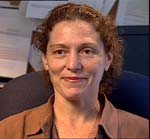
Patricial
J. Kissinger, PhD
associate professor,
department of biostatistics
|
|
|
Patricia
J. Kissinger, PhD
|
|
Suite
2000, Tidewater Building Suite
1440 Canal Street, New Orleans, LA 70112
Phone: (504) 988-7320 - Fax: (504) 988-1568
e-mail: kissing@tulane.edu
Patricia Kissinger received her BS in nursing
from Marquette University in 1981. Following
graduation, she served as a Peace Corps
volunteer in Zaire for three years, working
as a coordinator of a rural health zone
of 160,000 people. She then came to Tulane
to complete her MPH and PhD degrees.
Kissinger
collaborated with researchers at Johns Hopkins
University on a study to examine the rate
of HIV perinatal transmission in Haiti,
where she worked for four years. She also
worked in several countries in Africa as
an evaluator for Plan International and
as a relief worker for the International
Rescue Committee. Her doctoral research
focused on the effect of HIV on child mortality
in Haiti. In 1992, Kissinger joined the
faculty at Louisiana State University in
the department of medicine and became the
chief epidemiologist at the HIV outpatient
clinic in New Orleans where she focused
on clinical research.
In
1993, Kissinger became an adjunct faculty
member in the Tulane department of epidemiology,
where she started the HIV/STD track in the
department of epidemiology in 1995, and
created and coordinated the epidemiology
track of the Centers for Disease Control
graduate certificate program in 1996. Kissinger
started full time at Tulane in 1999 and
is presently the principal investigator
on several CDC and NIH grants in HIV/STD-related
topics. She has mentored many doctoral students
who worked with her on research grants she
was awarded.
The
grants she presently works on are: an evaluation
of HIV partner notification, a clinical
trial to examine the efficacy of patient-delivered
partner treatment for reduction of recurrent
chlamydia infections, HIV in rural Louisiana
and MYRIAD rapid testing for pregnant women
and access to perinatal prophylaxis. Her
research interests are HIV/AIDS, sexually
transmitted diseases, infectious diseases
and reproductive health.
Research
Interests
STDs/HIV and women's reproductive
health
Education
BSN,
Marquette University, 1981
MPH, Tulane University School of
Public Health and Tropical Medicine, 1987
PhD, Tulane University School of
Public Health and Tropical Medicine, 1992
|
|
|
 |
|
John
J. Lefante, Ph.D.
associate professor, department of biostatistics
|
|
John
J. Lefante, PhD
Suite
2013, Tidewater Building
1440
Canal Street, New Orleans, LA 70112
Phone: (504) 988-7874 - Fax: (504) 988-1706
e-mail:
lefante@tulane.edu
Research
Interests
longitudinal data analysis
occupational health studies
health care access and evaluation
Education
BS, math education, University of New Orleans,
1974
MS, mathematics, University of New Orleans,
1976
PhD, biostatistics, University of Alabama
in Birmingham, 1981
|
|
John
Lefante has twenty-three years of experience teaching
a variety of statistics courses including: Introductory
Biostatistics, Intermediate Biostatistics, Regression
Analyses, Sampling, Non-Parametric Statistical
Methods, and Probability and Mathematical Statistics.
In addition, Lefante has extensive experience
teaching managerial biostatistics courses in the
masters of medical management, the executive masters
of health administration, and the executive doctor
of science in health administration programs in
the department of health systems management at
Tulane.
On
four occasions he has been the recipient of the
Tulane School of Public Health and Tropical Medicine
Excellence in Teaching Award (1993, 1995, 2001,
and 2004), as well as a recipient of the Department
of Health Systems Management Masters of Medical
Management Excellence in Teaching Award (1997)
and the Department of Health Systems Management
Executive Masters of Health Administration Teaching
Award (2002). In 2004, Lefante was a finalist
for the prestigious Tulane Senior Vice Presidents'
Teaching Scholar Award.
Lefante's
research interests focus on statistical analyses
and evaluation of health effects data, including
statistical methodology for study design, sample
size and power calculations, especially for longitudinal
data. He is the principal investigator on a grant
through the Rapides Foundation to provide an evaluation
of the level of success and ongoing progress of
an existing pharmaceutical care program for residents
of central Louisiana. (The CENLA Medication Access
Program). He was a participating investigator
for five years in environmental and occupational
epidemiological studies as part of Tulane's specialized
center of research in occupational and fibrotic
lung diseases.
Lefante holds an adjunct appointment at Tulane
University School of Medicine, with seventeen
years of experience collaborating on occupational
lung studies with investigators in the pulmonary
research section. He has participated in long-term
studies of health effects of workers in a variety
of industries, including cotton textile, chlorine
manufacturing and use, wood processing and manufacturing,
and paper processing. Dr. Lefante has over seventy
published manuscripts and abstracts in the areas
of occupational medicine, cancer research, health
care evaluation, and statistical methods.
|
|
|
|
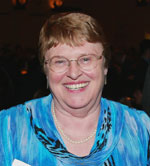
Kate
Macintyre,
PhD
Suite
2200, Tidewater Building
1440 Canal Street, New Orleans, LA 70112
Phone: (504) 988-5185 - Fax: (504) 988-3653
e-mail: kmacint@tulane.edu
Kate
Macintyre has more than fifteen years of professional
international experience in the areas of program
management, health policy, reproductive health
(including adolescent reproductive health, maternal
health and HIV/AIDS), behavior change programming
for infectious diseases including HIV/AIDS, tuberculosis
and malaria, monitoring and evaluation, and survey/sampling
methods.
Macintyre has worked in Latin America and Africa,
and is currently focused on projects in Eritrea,
Kenya and South Africa. Her projects in Kenya
and South Africa are looking at interventions
to reduce the burden of malaria, implementing
HIV/AIDS programs to reduce stigma and discrimination,
and measuring the impact of school-based interventions
on adolescent reproductive health. She has more
than fifteen peer-reviewed publications.
Macintyre
worked on The Evaluation Project from 1993 through
1996 with Professor Bilsborrow from the University
of North Carolina, to test the quality and cost
of data gathered using rapid assessment surveys
for family planning evaluation in Ecuador. She
has also been intensively working for the past
two years on the MEASURE Evaluation Project, focusing
on malaria and tuberculosis measurement issues
for monitoring and evaluation. Macintyre has also
been advising and supporting the development of
a multidisciplinary doctoral training program
for the National Cuban School for Public Health
in Havana. Macintyre received her doctorate from
the University of North Carolina, Chapel Hill,
in Health Policy and Administration.
Education
MA, BA modern history, Sidney Sussex College,
Cambridge University, 1984
MSPH department of health policy and administration,
University of North Carolina, Chapel Hill, 1992
PhD department of health policy and administration,
University of North Carolina, Chapel Hill, 1997
|
|
 |
|
Frances
J. Mather, PhD
assistant dean, department of academic information
systems and associate professor, department
of biostatistics
|
|
Frances
Mather, PhD
Suite
2035, Tidewater Building
1440
Canal Street, New Orleans, LA 70112
Telephone: (504) 988-7329 Fax: (504) 988-1706
Email:
mather@tulane.edu
Frances Mather received her doctorate in biostatistics
from Tulane in 1975 and became an associate professor
in the department of biostatistics and epidemiology
in 1981. In Betheda, Maryland, Mather served as
assistant to the chief of the biometric research
branch before subsequently returning to Tulane
in 1988 to serve as adjunct associate professor
for the department of surgery. Ten years later,
Mather became the assistant dean for academic
information systems at the School.
Mather's
research areas include clinical trials, survival
analysis, evaluation of maternal and child health
programs, and design and implementation of database
management systems. She was a long-time member
of the research grant review committee for the
Maternal and Child Health Bureau and was awarded
the NIH, FIC Global Infectious Disease Research
Training Program Award in 2004. She has published
over fify peer-reviewed papers.
Research
Interests
survivial analysis
clinical trials
data base management
Education
BS, mining engineering, University of Alberta,
Canada 1959
MS, statistics, University of Michigan,
1969
PhD,
biostatistics, Tulane University, 1975
|
|
 |
|
Alan Miller, PhD, MD
associate senior vice president, health
sciences center
|
|
|
Alan
Miller, PhD, MD
|
|
Suite
2400, Tidewater Building
1440
Canal Street, New Orleans, LA 70112
Telephone: (504) 988-7566 Fax: (504) 988-7644
Email:
amiller@tulane.edu
Alan Miller is the associate senior vice
president for health sciences at Tulane
University. He is involved in all aspects
of administration at the Tulane University
Health Sciences Center, including clinical,
research, education, fiscal and advancement.
The center is comprised of the schools of
medicine and public health, as well as the
Tulane National Primate Research Center.
Current
projects under Miller's leadership include
a comprehensive review and strategic plan
for the Tulane University Medical Group,
a task force to identify and implement changes
needed to expand the clinical research profile
at Tulane, and a feasibility analysis on
the possibility of adding an additional
school to the Health Sciences Center. Miller
reports to the senior vice president for
health sciences, and serves as senior officer
for the Health Sciences Center in the absence
of the senior vice president. He is a practicing
medical oncologist and previously has served
as the director of bone marrow transplantation
as well as vice president and associate
dean for clinical affairs at Tulane.
In
his current position, Miller takes a leadership
role in healthcare practice and policy for
the university. He has been a member of
the Louisiana Healthcare Commission since
2000 and currently serves as vice chairman.
On a national level, he serves on the Association
of American Medical Colleges Advisory Panel
on healthcare delivery. He is a member of
the administrative board of the Huey P.
Long Medical Center, a primary liaison for
Tulane's relations with the Medical Center
of Louisiana at New Orleans and the LSU
Health Sciences Center, and also serves
on the governing board of Tulane University
Hospital and Clinic.
Alan Miller is vice chairman of the Board
of the New Orleans Bio-Innovation Center,
which is developing a downtown biotechnology
center to include a wet-lab incubator and
a GMP facility for producing clinical grade
gene therapy agents. He is chairman of the
board of the New Orleans Regional Medical
Complex, a coalition of several universities,
governmental and business organizations,
charged with planning and developing Louisiana
Biomedical Research and Development Park.
He also serves as one of Tulane's primary
liaisons in the LSU/Tulane partnerships
in gene therapy and cancer, serving on the
boards of both partnerships.
Education
BA, biology, SUNY at Buffalo, 1972
MA, physiology, Roswell Park Division,
SUNY at Buffalo, 1974
PhD, physiology, Roswell Park Division,
SUNY at Buffalo 1976
MD, University of Miami School of
Medicine, 1983
|
|
|
|
 |
|
Charles
A. Miller III, PhD
assistant professor, department of environmental
health sciences
|
|
|
Charles
A. Miller III, PhD
|
|
Suite
374, Center for Bioenvironmental Research
|
|
1430
Tulane Avenue, New Orleans, LA 70112
|
|
Phone:
(504) 988-6942 Fax: (504) 988-1726
|
|
e-mail:
rellim@mailhost.tcs.tulane.edu
|
|
Charles
Miller received his bachelor of science degree
in biology from the University of Alabama in Birmingham.
There, he worked as a research associate in the
pharmacology and biochemistry departments, as
well as at the cancer center. He has studied anti-malarial
drug toxicity with Roy Mundy, chemical carcinogenesis
with Awni Sarrif, colon cancer biology with Michael
Brattain, and the immunology of natural killer
cells with Toru Abo and Charles Balch.
Miller joined Max Costa's laboratory and studied
carcinogenic mechanisms of nickel and chromium
compounds and earned a doctor of philosophy degree
in environmental oncology from the Sackler School
of Basic Medical Sciences of New York University.
During this time, he was the recipient of a fellowship
from Shell Oil Company. His post-doctoral research
was conducted in David Kowalski's laboratory at
the Roswell Park Cancer Institute. There he described
several new DNA replication origins in yeast.
He is presently an associate professor in the
Environmental Health Sciences Department at Tulane
University School of Public Health and Tropical
Medicine.
Miller's
research interests include understanding the mechanisms
of receptor-mediated toxicity. This research is
relevant to public health because many environmental
chemicals (both natural and anthropogenic) exert
toxic effects through receptors. Specifically,
his research focuses on how chaperone (heat shock)
proteins regulate the aryl hydrocarbon (dioxin)
receptor
Education
BS,
biology, University of Alabama in Birmingham
1981
PhD, basic medical sciences (environmental
oncology), Sackler School of Basic Medical Sciences,
New York University, 1990
Postdoctoral training, DNA replication,
Department of Molecular and Cellular Biology,
Roswell Park Cancer Institute, Buffalo, NY, 1990-1993
|
|
|
|
Nancy
Mock
Suite
2200, Tidewater Building
1440 Canal Street, New Orleans, LA 70112
Phone:(504) 988-7318 Fax: (504) 988-3653
e-mail: mock@tulane.edu
Nancy
Mock currently serves as the director of the Tulane
Center for International Resource Development,
and is a tenured associate professor in the department
of international health and development at the
Tulane School of Public Health and Tropical Medicine.
As center director, she is responsible for the
development and management of international projects
valued at over 4.5 million dollars annually.
Nancy
has nearly twenty years of international experience
in health sector program design and research.
Currently, she is working on the Support for Analysis
and Research in Africa (SARA) project, which is
designed to improve the gathering, synthesis and
dissemination of information about common health
problems and emerging social issues in Africa,
in an effort to improve the efficiency of the
health and social sectors. In addition, she is
involved in the Complex Emergency Response and
Transition Initiative (CERTI), a crisis coordination
project that aims to prevent and mitigate conflict,
improve timely and appropriate response, and offers
support to populations affected by conflict in
transition.
She
is also currently involved in the development
of a school of public health in Rwanda. Dr. Mock
has field experience in all major geographic regions
of the developing world, is fluent in French and
competent in Spanish.
Education
BS biology, Yale University, 1976
MPH international health and planning and
evaluation, Tulane University School of Public
Health and Tropical Medicine, 1979
DrPH international health/nutritional epidemiology,
Tulane University, 1985
|
|
 |
|
Larry
S. Webber, PhD
professor, department of biostatistics
|
|
|
Larry
S. Webber, PhD
|
|
Suite 2085, Tidewater Building
|
|
11400 Canal Street, New Orleans, LA 70112
|
|
Phone:
(504) 988-7322 Fax: (504) 988-1706
|
|
e-mail:
lwebber@tulane.edu
|
|
Larry
Webber received his BS in mathematics from
Louisiana State University at Baton Rouge
in 1967. After attending graduate school
at Louisiana State University Health Sciences
Center, he entered Yale University where
he received an M.Phil. degree in biometry
and a Ph.D. degree in biometry. Webber was
appointed by the National Research Council
as a statistician with the Atomic Bomb Casualty
Commission (now the Radiation Effects Research
Foundation), where he worked from 1972 to
1974. In 1974, he took a faculty position
with Louisiana State University Health Sciences
Center as head of the Planning and Analysis
Core for the Bogalusa Heart Study, a long-term
epidemiological investigation of cardiovascular
risk factors and risk behaviors. He reached
the rank of professor in the departments
of medicine, biometry and genetics in 1984.
Since 1991, Webber has served as professor
and chair in the department of biostatistics
at Tulane University School of Public Health
and Tropical Medicine. He has published
over 270 papers as principal author or co-author.
He is a reviewer for several epidemiological
and public health journals and has served
on various NIH review panels. The primary
focus of his research is the epidemiology
of cardiovascular risk factors and risk
behaviors during childhood and adolescence.
Since
1987, Webber has been associated with several
school-based intervention models to reduce
risk factors and alter risk behaviors. He
serves as the principal investigator for
the Louisiana site of two multi-site clinical
trials; the Child and Adolescent Trial of
Cardiovascular Health (CATCH) and the Trial
of Activity for Adolescent Girls (TAAG).
The former is a multi-component program
to reduce dietary fat, increase physical
activity and reduce the onset of tobacco
use in elementary school children. The latter
is a multi-site trial to increase opportunities
for and participation in physical activity
for middle school-age girls. Webber serves
as chair of the steering committee for the
TAAG trial.
Research
Interests
measurement
cardiovascular epideiology
longitudinal analysis
Education
BS,
mathematics, Lousiana State University 1967
MPhil, biometry, Yale University,
1970
PhD,
biometry, Yale University, 1973
|
|
|
|
 |
|
|
|
|
|
|
|















